Choosing a Community and Checking Flood Risk
Where you live shapes your daily life and your annual insurance bill. Old Naples, Pelican Bay, and Port Royal offer walkability and water access at premium prices. Estero and Gateway appeal to families seeking value and newer construction. Lehigh Acres is more affordable but comes with longer commutes and fewer amenities.
Before you commit to any address, ask for the flood zone classification. If you are renting, your landlord’s insurance covers the building structure, not your belongings, and standard renters insurance does not cover flood damage. If you are buying, get an insurance quote before you make an offer, not after. Roof age matters enormously: many carriers will not write new policies on roofs over 20 years old without replacement.
Timing Your Move Around the Season
Southwest Florida has a distinct season, roughly November through April, when traffic, restaurant waits, and demand for services all increase. If your schedule allows, moving in late spring or summer means lower moving costs and far easier scheduling with local movers and contractors. If you must move during season, book your crew as early as possible.
Establishing Florida Residency
Once you arrive, several deadlines apply. You must obtain a Florida driver license within 30 days of establishing residency, and register your vehicles within 10 days. If you purchased a home, file for the homestead exemption with your county property appraiser by March 1 of the following year; missing this deadline means waiting another year. Register to vote in Florida, and if you were registered in your former state, cancel that registration to avoid residency complications.
Hurricane Preparation Starts Immediately
Do not wait until a storm is in the Gulf. Know your evacuation zone, purchase renters or homeowners insurance before you need it, and understand that standard policies typically exclude flood damage from storm surge and rising water. A separate flood policy, even a contents-only policy for renters, is worth the modest annual cost in coastal or low-lying areas. If you are buying, homes built to newer building codes (2002 or later) generally held up better during Hurricane Ian, which is a factor worth weighing in your search.
When to Contact a Professional
You should reach out to a professional mover as soon as your move date is firm, ideally 4 to 8 weeks in advance, especially if you are moving during season or into a high-rise condo with elevator reservation requirements. If you are moving a full household and want help with boxes and wrapping, packing services can be scheduled alongside your move date. If your relocation crosses state lines, long-distance movers handle the logistics and pricing differently than a local crew.
If you are buying, connect with a local insurance agent early, before you fall in love with a home that turns out to be uninsurable at a reasonable cost. If you are renting, confirm whether the landlord requires renters insurance and get a quote before signing the lease. For tax and legal questions about residency, homestead exemptions, or estate planning documents created in another state, consult a Florida CPA or attorney.
How Cardinal Moving LLC Can Help
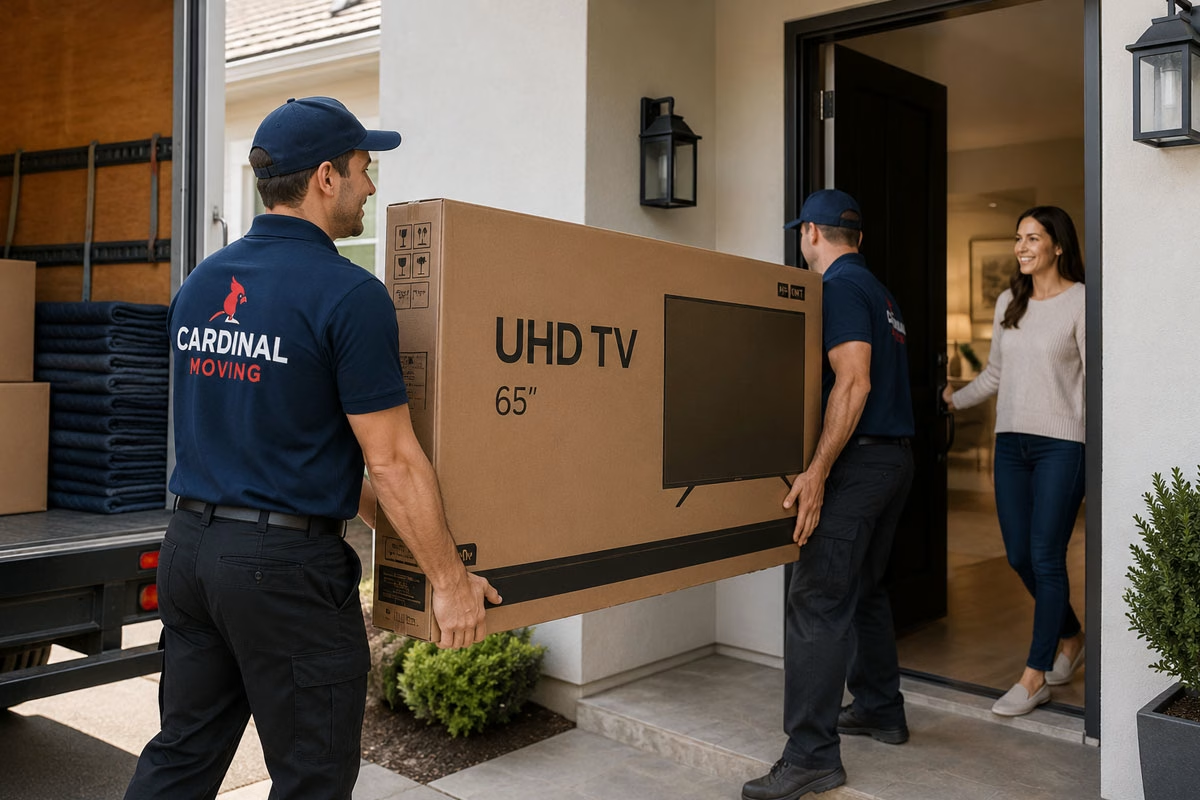
Cardinal Moving LLC handles the logistics of getting your belongings from your current home to your new Southwest Florida address. Whether you are moving a small apartment into a rental in North Naples or a full household into a home in Bonita Springs or Estero, the team can discuss your inventory, access details at both ends, and any specialty items that need extra care. Services include residential moving, full-service moving with packing assistance, loading and unloading, and piano moving for instruments that need specialized handling. If you are relocating for work, commercial movers and office movers can plan the move around your operating hours. To get a quote based on your specific move, contact the team at their Piper Blvd location.
Local Service Area
Cardinal Moving LLC serves Naples, Florida, and the surrounding Southwest Florida communities, including North Naples, Bonita Springs, Fort Myers, Estero, Cape Coral, Marco Island, Golden Gate, Naples Park, Pelican Bay, Lely Resort, The Vineyards, Fort Myers Beach, Sanibel, and Lehigh Acres. If you are moving into or out of any of these areas, local knowledge of road access and building requirements helps keep the move on schedule.
Frequently Asked Questions
Do I need renters insurance in Southwest Florida?
Yes, even if your landlord does not require it. Your landlord’s policy covers the building, not your furniture, electronics, or clothing. Standard renters insurance is inexpensive and covers your belongings. Separately, standard policies do not cover flood damage, so a contents-only flood policy is worth considering in coastal or low-lying areas.
When should I file for the homestead exemption?
File with your county property appraiser by March 1 of the year following your purchase. The exemption provides a minimum $50,000 reduction in taxable value and unlocks the Save Our Homes cap that limits annual assessment increases. Missing the deadline means you must wait until the next year to apply.
How far in advance should I book movers for a Southwest Florida move?
Book 4 to 8 weeks ahead if possible, and even earlier if you are moving during season (November through April) or at the end of a month. Late spring and summer offer more availability and often lower rates. High-rise condos may also require elevator reservations, which take additional coordination time.
What is the most common budget surprise for new residents?
Insurance. Homeowners insurance in Southwest Florida runs two to three times the national average, and flood insurance is a separate cost. Renters are often surprised that their landlord’s policy does not cover their belongings, and that standard renters insurance excludes flood damage. Get insurance quotes before you commit to a property, not after.
Do I need to change my driver license and vehicle registration?
Yes. Florida requires a Florida driver license within 30 days of establishing residency, and vehicle registration within 10 days. Applications for a license must be made in person, and you will need proof of Florida insurance to register a vehicle.
Final Call to Action
Ready to check “hire movers” off your Southwest Florida relocation checklist? Contact Cardinal Moving LLC to discuss your move, ask about packing and specialty item handling, and request an estimate for your Naples or Southwest Florida relocation.